Article
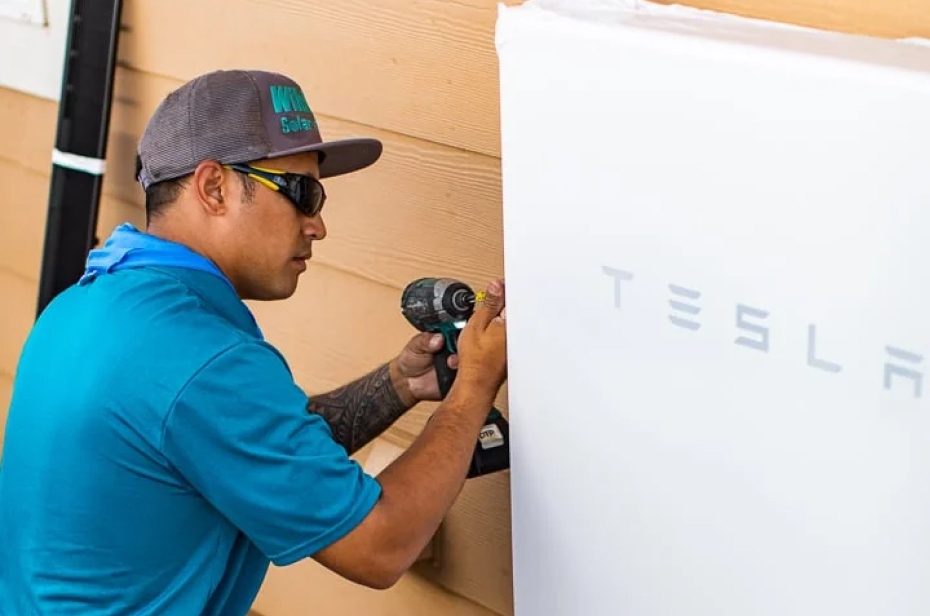
Capture the sun’s energy today, power your home tonight. As electricity rates climb and grid reliability becomes less predictable, solar batteries have moved from optional accessory to standard component of a modern solar power system.
They bridge the gap between intermittent solar production and round-the-clock energy access, giving homeowners control over when and how they use the electricity their panels generate.
What Is a Solar Battery?
A solar battery captures excess electricity from your solar panels and holds it for later use. Instead of sending surplus power back to the grid or losing it entirely, a battery lets you bank that energy and deploy it on your own schedule.
This extends your solar system’s usefulness well beyond daylight hours. During cloudy stretches, after sunset, or amidst power outages, a battery keeps your home running on stored solar energy rather than pulling from the grid.
How Solar Batteries Work
When your solar panels generate more electricity than your home is consuming, the excess flows into the battery. When demand exceeds production, the battery’s stored energy is converted back into usable AC power by your inverter.
Intelligent energy management software learns your household’s usage patterns and responds to time-of-use rate structures, automatically deciding when to store, hold, or release energy based on when electricity is cheapest and when grid pricing peaks.
For homeowners on time-of-use plans, this smart optimization can noticeably reduce monthly bills.
Types of Solar Batteries
The chemistry inside a solar battery determines its performance, lifespan, and cost.
Lithium Iron Phosphate (LFP)
LFP has become the residential standard. These batteries offer strong thermal stability, long cycle life, and cobalt-free construction that addresses both cost and ethical sourcing concerns.
According to the U.S. Department of Energy’s Battery Technologies Office, LFP’s olivine crystal structure resists the mechanical stress of daily cycling, which is why many current models are rated for 6,000 to 10,000 cycles at 80% depth of discharge. At one cycle per day, that translates to roughly 15 to 20 years of use.
Nickel Manganese Cobalt (NMC)
NMC lithium-ion batteries pack a higher energy density than LFP, storing more energy in a smaller physical footprint. That can matter in space-constrained installations. The tradeoff is a somewhat shorter lifespan and slightly higher heat sensitivity.
According to NREL’s 2024 Annual Technology Baseline, LFP overtook NMC as the primary chemistry for stationary storage starting in 2021, largely because of these cost and longevity differences.
Lead-Acid
According to SEIA’s Q1 2026 Energy Storage Market Outlook, lithium-ion now accounts for the vast majority of new U.S. storage installations across residential, commercial, and utility-scale segments. Lead-acid still appears in off-grid and budget-focused setups, but for most homeowners building a solar-plus-storage system today, lithium chemistries deliver better long-term value.
Flow Batteries
Flow batteries store energy in liquid electrolytes that circulate through the system. They can deeply discharge without damaging the system and offer exceptionally long cycle life.
A 2024 DOE technology assessment of flow batteries highlights their potential for long-duration storage, with some vanadium redox systems demonstrating 20+ year operational lifespans in field deployments. However, their low energy density means they require significantly more physical space than lithium-ion alternatives, making them impractical for most residential settings.
Benefits of Solar Batteries
Energy Independence and Backup Power
A solar battery reduces your reliance on the grid during peak demand periods when rates spike and during outages when the grid goes down entirely. If you’ve weighed whether solar panels need a backup generator, a properly sized solar battery for home backup can handle outages lasting one to three days on its own. For longer outages, the battery recharges from your panels each day, extending autonomy as long as the sun cooperates.
Lower Electricity Bills
Batteries let you consume more of the solar energy your system produces rather than exporting it at a lower credit rate. Storing excess daytime generation and deploying it during expensive peak-rate windows is sometimes called energy arbitrage, and for homeowners on time-of-use plans, it adds up.
Future-Proofing Your System
The federal residential solar tax credit (Section 25D) expired at the end of 2025. Homeowners can still access incentives through solar leasing or PPA arrangements under the commercial credit (Section 48E) through 2027, but the incentive landscape is changing. Adding a battery now maximizes your system’s self-consumption and insulates you from rising utility rates and shifting policy, regardless of what happens with future incentives.

How Solar Batteries Can Save You More
Key Considerations for Homeowners
Sizing Your Battery System
Getting the right battery size means matching storage capacity to your household’s actual energy patterns. Too small and you won’t make it through peak hours or outages; too large and you’re paying for capacity you don’t use.
Three factors drive the decision:
- Daily Energy Consumption: Track how many kWh your household uses in a typical day to establish your baseline storage need. Our guide on how many solar batteries you need walks through the math.
- Peak Demand: Identify the highest draw your home requires at any given moment. This determines the battery’s power output rating (measured in kW), which is separate from its storage capacity (measured in kWh).
- Solar Production Patterns: Evaluate how much energy your panels generate on average across seasons. A system in Maryland will have different seasonal dynamics than one in Florida. Explore what solar looks like in your state for a clearer picture.
Installation and Long-Term Value
When evaluating cost, look beyond the sticker price:
Installed Cost Per kWh:
According to the National Renewable Energy Laboratory’s (NREL) cost benchmarks, residential battery systems vary based on capacity, inverter type, and regional labor rates. Industry data from SEIA and multiple installer surveys puts typical installed costs between $700 and $1,300 per kWh before incentives. Batteries with integrated inverters can reduce total system cost by eliminating a separate inverter purchase.
Available Incentives
While the direct residential tax credit is no longer available for homeowner-purchased systems, state-level rebates, property tax exemptions, and performance-based incentives still exist in many markets. Check the incentives available in your state to understand your options.
Key Performance Specs
Depth of discharge (DoD), round-trip efficiency, cycle life, and warranty length all affect lifetime value. For residential LFP systems, look for 80% or higher DoD, 90%+ round-trip efficiency, and a warranty of at least 10 years. The DOE’s Energy Storage Grand Challenge tracks ongoing improvements in these benchmarks as battery technology continues to advance.
All of Solar Energy World’s solar equipment is battery-ready, so even if you start with panels only, you can add solar battery storage later without overhauling your system. To protect your full setup, it may also be worth considering a whole-home surge protector.
Where Solar Batteries Are Headed
U.S. battery storage deployment is projected to grow 21% in 2026, according to a report from the Solar Energy Industries Association (SEIA), driven by rising electricity demand, aging grid infrastructure, and continued cost declines. Lithium-ion pack prices have dropped roughly 90% since 2010, and LFP chemistry in particular keeps getting cheaper and more capable.
A few trends worth watching:
- Modular battery systems that let you start small and scale storage capacity over time as your needs or budget grow
- Vehicle-to-home (V2H) technology that turns an EV’s battery into a backup power source for your house
- AI-driven energy management that optimizes charge and discharge behavior in real time based on weather forecasts, rate schedules, and usage history
Solar batteries are becoming standard. Whether you’re new to solar energy or upgrading an existing system, pairing panels with storage is the most direct path to energy independence, lower bills, and long-term resilience.Schedule a free solar evaluation with Solar Energy World to get a personalized cost-benefit analysis for your home.
Want a Free Solar Estimate?
Fill out the form to get started today.