Article
What Are Peak Sun Hours? How Much Do Your Solar Panels Need?
Peak sun hours are a standardized metric for quantifying the amount of usable solar energy that reaches a given location. Instead of calculating the total hours of sunlight, this metric focuses on the periods when sunlight intensity averages 1,000 W/m². With this approach, homeowners and solar professionals can more accurately estimate solar energy production and compare conditions across regions using a consistent baseline.
Sunlight varies based on geography, climate, and the design of a solar system, so peak sun hours can differ significantly from one location to another. Understanding how peak sun hours are measured and how they are used in solar planning helps explain why solar systems can perform differently from home to home. There is no single national benchmark for solar output, making this measurement an important part of the planning process.
What Are Peak Sun Hours?
Peak sun hours represent the total amount of solar energy received in a day by translating varying sunlight intensity into an equivalent number of hours at peak conditions. One peak sun hour is defined as one hour of sunlight at 1,000 W/m² intensity.
This measurement does not mean the sun shines at peak intensity for consecutive hours. Instead, it adds up all the sunlight received throughout the day and expresses it as a standardized unit. For example, a day with many hours of lower-intensity sunlight can provide the same number of peak sun hours as a day with a few hours of intense sunlight.
This distinction matters because total daylight hours alone do not reflect the amount of usable solar energy available for generating electricity.
How Peak Sun Hours Are Measured
Peak sun hours are based on standardized solar irradiance measurements collected over long periods of time. Solar resource data are collected using ground-based sensors and satellite observations and then averaged over multiple years to smooth out short-term weather variability.
These long-term averages help provide planning context, but they are not predictions of daily or seasonal performance for a specific property. Individual results vary based on roof orientation, shading, weather patterns, and system design.
Why Peak Sun Hours Are Important for Solar Energy
Peak sun hours are one of the core inputs used to estimate how much electricity a solar system can produce over time. By combining peak sun hours with system size and panel efficiency, installers can model expected energy production and design systems that align with household electricity use.
Installers also rely on peak sun hours to account for regional sunlight variability when sizing systems. A home in a lower peak sun hour region can still meet its energy needs with solar, but it may require a different system size or layout than a similar home in a sunnier area.
At the same time, peak sun hours do not guarantee performance. They do not account for temporary weather conditions, equipment issues, or household usage changes. They are a planning tool, not a promise of output.
Factors That Affect Peak Sun Hours
Several variables influence the number of peak sun hours a location receives over time.
Geographic location and latitude play a significant role. Areas closer to the equator generally receive more consistent and intense sunlight throughout the year, while higher latitudes experience greater seasonal variation.
Seasonal changes also affect peak sun hours. Longer summer days and higher sun angles typically increase solar potential, while shorter winter days reduce it.
Clouds and weather can also get in the way. Even if you’ve got a lot of daylight, a string of gloomy days will bring your average peak sun hours down.
And don’t forget about your actual setup. Which way your panels face, their angle, and whether anything blocks the sun (like a big oak tree or nearby building) all make a difference. That’s why two houses on the same block can get different results.
Peak Sun Hours in U.S. States
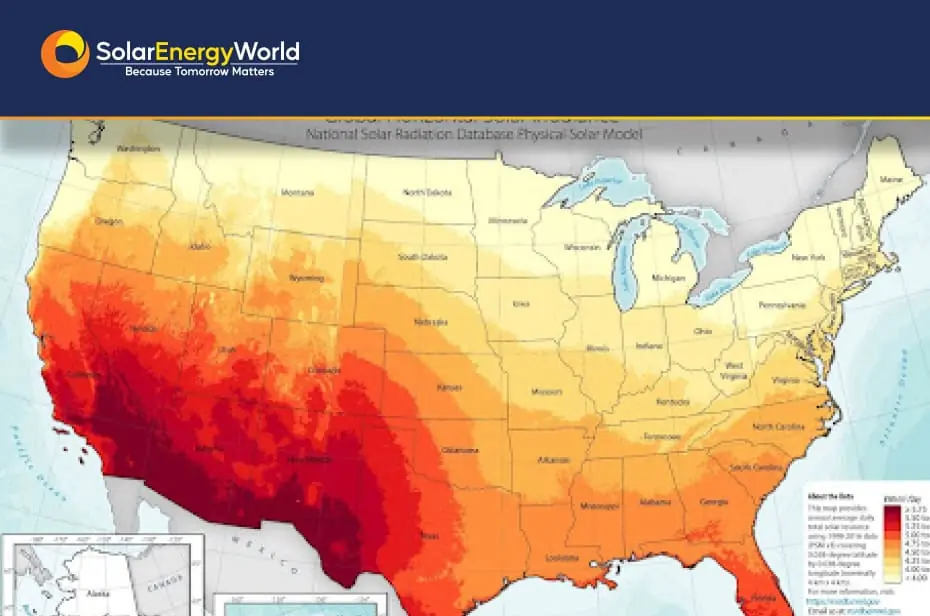
Across the U.S., peak sun hours can swing a lot thanks to geography, climate, and weather. Instead of hard numbers, most states use ranges based on years of solar data.
These ranges keep expectations realistic—they’re averages for planning, not exact figures for your house. State data is useful for comparison, but nothing beats having an expert check your own property.
Average Peak Sun Hours by State
Here’s a quick rundown of average peak sun hour ranges for some U.S. states. Remember, this is just for planning—the real numbers for your home will depend on your unique situation.
| State | Average Peak Sun Hours (PSH) |
| Arizona | 7 – 8 |
| California | 5 – 7.5 |
| Colorado | 5 – 6.5 |
| Delaware | 4.5 – 4.9 |
| Florida | 3.5 – 4.5 |
| Georgia | 4 – 4.5 |
| Illinois | 3 – 4 |
| Maryland | 3 – 4 |
| Massachusetts | 2.5 – 3.5 |
| Michigan | 2.5 – 3.5 |
| Missouri | 4 – 4.5 |
| Nevada | 6 – 7.5 |
| New Jersey | 3.5 – 4 |
| North Carolina | 4 – 4.5 |
| Ohio | 2.5 – 3.5 |
| Pennsylvania | 2.5 – 3.5 |
| Rhode Island | 3 – 4 |
| South Carolina | 4 – 4.5 |
| Texas | 4.5 – 6 |
| Utah | 6 – 7 |
| Virginia | 3.5 – 4 |
Peak Sun Hours by U.S. Regions
Regional differences usually come down to location, climate, and weather quirks.
- Northeastern States: Up in places like Massachusetts and Michigan, the sun is a bit stingier—think more clouds, longer winters, and less overall sunlight. You can still go solar, but you might need a bigger system or a backup energy source.
- Northwestern States: States such as Washington and Oregon tend to have lower average peak sun hours due to frequent cloud cover and higher annual precipitation. While these regions receive less intense sunlight overall, solar energy remains viable with properly designed systems that account for local weather patterns and seasonal variation.
- Southeastern States: Florida and Georgia fall somewhere in the middle. They get decent sun but also have their share of storms and seasonal changes. With a good plan, solar panels can still do the job efficiently.
- Southwestern States: If you’re in Arizona or Nevada, you’re in luck—these states get loads of sun thanks to their southern location, dry air, and clear skies. That’s why solar works so well there.
Knowing these regional quirks helps you make smarter choices about your solar investment and get the most bang for your buck.
How to Calculate Peak Sun Hours
Peak sun hours get calculated by dividing all the daily solar energy by 1,000 watts per square meter. Most homeowners never have to do this math themselves—installers handle it.
Installers just pull from trusted solar data and combine that with your system’s details to estimate how much power you could generate. This is all for planning—it’s not a guarantee of exact results.
Learn How to Optimize Solar Power Year-Round
Determining How Many Peak Sun Hours You Need
There’s no magic number of peak sun hours needed for solar panels to work. As long as you get some sun, a system can be built around what’s available and what you actually use at home.
If you’re in a place with fewer peak sun hours, don’t worry—you can still benefit from solar by tweaking the system size, layout, or even just where the panels go. Sometimes, bigger or smarter setups make up for less sunlight.
So the real question isn’t “How many peak sun hours do I need?” It’s “How can I design a system that works well with what I’ve got?”
Relationship Between Peak Sun Hours and Solar Panel Output
Peak sun hours are just one variable in figuring out your system’s output. Things like panel efficiency, equipment losses, inverter performance, and how much power you use all come into play.
Even two homes in the same region with similar peak sun hours can see very different results. That’s why a good system design and realistic expectations matter so much.
Making the Most Out of Your Solar Panels
Want your system to perform its best? Start with smart placement and orientation. Tilting the panels just right and keeping them out of the shade can really boost how much sun they catch.
A pro designer will look at your local weather, your roof’s quirks, and what you want to achieve. Instead of obsessing over peak sun-hour averages, it’s smarter to take a big-picture approach that weighs every variable.
Evaluating Whether Solar Is Right for You
Peak sun hours matter when you’re weighing solar, but they’re just one piece of the puzzle. Your energy use, roof, local incentives, and long-term plans all factor in.
A professional site visit takes all that big-picture solar data and turns it into practical advice for your property, so you can make the best call for your home.
Claim Your FREE Solar Estimate
A personalized solar estimate reviews your home’s electricity usage, local peak sun hours, and system design options to help you understand how solar could work for your situation. To explore system sizing, production expectations, and financing options tailored to your home, request a free solar estimate.nding your energy usage, you can determine how much solar power you need to generate.
Want a Free Solar Estimate?
Fill out the form to get started today.