Article
Going Solar in Maryland: Is It Worth the Investment?
The short answer is yes, but the math looks different than it did a year ago.
The federal 30% tax credit for homeowner-purchased systems expired on December 31, 2025. Maryland’s $1,000 Clean Energy Rebate wrapped up around June 2025. For cost-conscious homeowners, those are real changes worth understanding before making a decision.
What hasn’t changed is that Maryland remains one of the stronger states for solar savings. Net metering, sales and property tax exemptions, Solar Renewable Energy Credits (SRECs), and new state grant programs are still on the table.
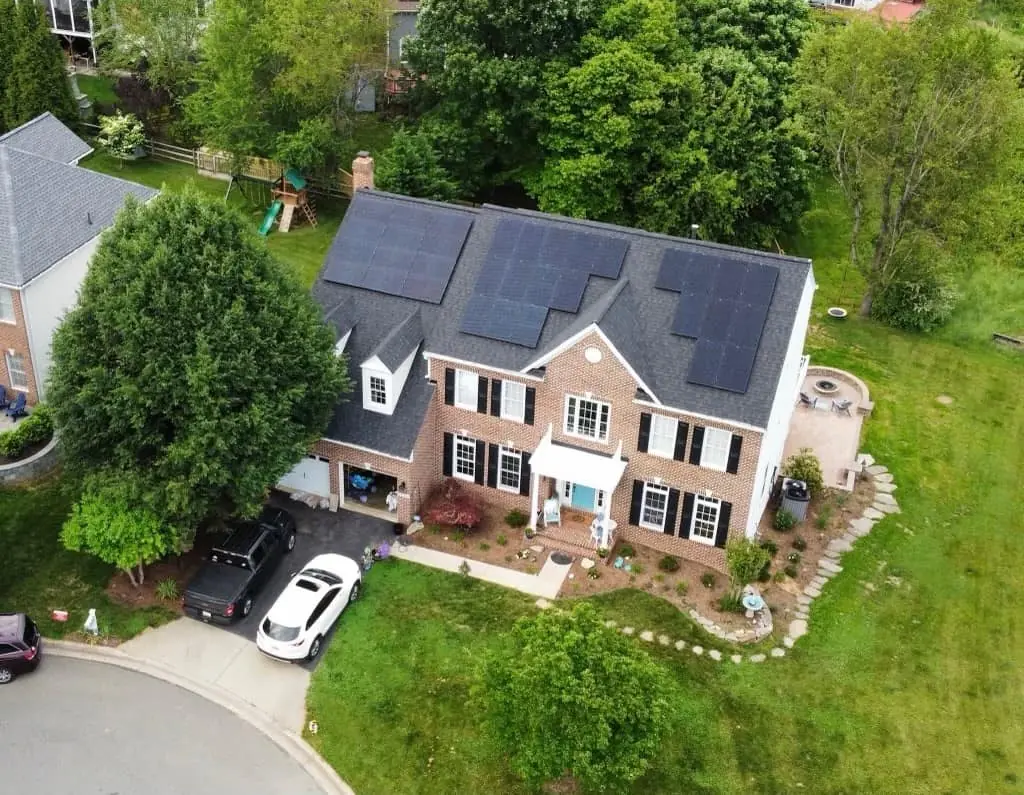
For homeowners who don’t want to pay upfront, solar panels to Maryland homes through a lease may now offer a better day-one value than a cash purchase.
Is Solar a Good Fit for Maryland?
Maryland checks most of the boxes that determine whether rooftop solar energy will pay off.
Sunlight
Maryland averages around 4.5 peak sun hours per day, enough to produce meaningful electricity year-round from a properly sized system.
Electricity Rates
BGE, PEPCO, and Delmarva Power customers pay above the national average for electricity. Maryland residential rates rose 24% from 2020 to 2024, which means solar displaces more cost per kilowatt-hour produced compared to lower-rate states.
Net Metering
Maryland’s net metering policy reimburses solar owners at the full retail rate for excess electricity sent to the grid. Credits roll forward month to month and can accumulate indefinitely, which matters during low-production winter months.
Roof Suitability
South- or west-facing roofs with minimal shading produce the most. A site assessment during the solar installations process confirms whether your specific property qualifies.
Is It Worth Getting Solar Panels in Maryland?
For most homeowners, yes, provided the financing structure fits their situation. A typical Maryland home can save $84,000 to $85,000 over 25 years on electricity costs with a cash-purchased system.
Payback periods for Maryland homeowners typically run 8 to 12 years on a cash purchase, depending on system size, utility rates, and applicable incentives. That timeline has stretched slightly in 2026 for buyers since the 30% federal tax credit is no longer available for purchased systems.
Homeowners using leases are in a different position. Third-party system owners can still access the commercial solar tax credit through the end of 2027 and typically pass those savings through as lower monthly rates.
What Maryland Solar Incentives Are Available in 2026?
Federal and state incentive availability has shifted significantly. The table below reflects current program status as of March 2026.
| Incentive | Status | Value |
| Federal ITC (purchased systems) | Expired Dec 31, 2025 | $0 for 2026 buyers |
| Federal ITC (lease/PPA) | Active through 2027 | 30% to system owner, passed through as savings |
| Maryland Solar Access Program (MSAP) | Open through June 5, 2026 | Up to $7,500 for qualifying households |
| RCES Battery Storage Grant | Active FY2026 | 30% of cost, up to $5,000 |
| Maryland Sales Tax Exemption | Active | 6% exemption on all solar equipment |
| Maryland Property Tax Exemption | Active | No increase in assessed value |
| Net Metering | Active | Full retail-rate credits, indefinite rollover |
| SRECs | Active | ~$55 per megawatt-hour |
| Maryland Clean Energy Rebate | Expired ~June 2025 | No longer available |
Maryland Solar Access Program (MSAP)
The Maryland Solar Access Program, established by the Brighter Tomorrow Act of 2024, provides grants of $750 per kilowatt (kW) of installed solar capacity, up to $7,500, for low- and moderate-income Maryland homeowners. Applications are open on a first-come, first-served basis through June 5, 2026, or until budgeted funding is exhausted. Only installations completed by Maryland Energy Administration (MEA)-approved contractors qualify.
RCES Battery Storage Grant
The Maryland Residential & Commercial Energy Storage (RCES) Grant Program launched in FY2026 as the replacement for the now-ended Energy Storage Income Tax Credit. The grant covers 30% of installation costs for a grid-connected battery storage system, up to $5,000. The FY2026 budget is $2,000,000 and is awarded on a first-come, first-served basis. Funding has moved quickly in prior years, so homeowners interested in battery storage should apply early.
Net Metering
Maryland’s net metering policy reimburses solar owners at the full retail electricity rate for every kilowatt-hour sent to the grid. Unused credits carry forward indefinitely, and homeowners can cash out any remaining balance each April at the annual true-up date, though that payout comes at a lower rate than the retail credit value.
SRECs
Maryland utilities must meet Renewable Portfolio Standard targets, which creates ongoing demand for Solar Renewable Energy Credits. Each SREC represents one megawatt-hour of solar production and can be sold to utilities. Current market values run approximately $55 per SREC. A 5 kW system producing around 6 megawatt-hours annually could earn roughly $330 per year through SRECs alone.
County-Level Incentives
Several Maryland counties stack additional property tax credits on top of state benefits. The Database of State Incentives for Renewables and Efficiency (DSIRE) maintains current details for each program.
| County | Incentive | Max Value |
| Anne Arundel | Property tax credit for solar systems | $2,500 |
| Harford | Property tax credit for heating, cooling, and energy generation | $2,500 |
| Howard | Property tax credit (stacks with statewide exemption) | Varies |
| Prince George’s | Alternative energy tax credit for residential installations | $5,000 |
Key Considerations When Switching to Solar in Maryland
Homeowners recognizing the benefits of solar panels still need to weigh a few variables before committing.
Ownership vs. Leasing
Buying vs. leasing solar comes down to a different equation in 2026 than it did a year ago. Buying with cash or a loan was historically the highest-return option because of the 30% federal tax credit. That credit is gone for buyers.
Leases don’t require upfront payment and still benefit from a tax credit passed through by the system owner.
For homeowners prioritizing monthly savings over long-term ownership, third-party financing now competes more closely with outright purchase.
Roof Condition
Installing solar on a roof that needs replacement within five years creates unnecessary cost and disruption. A pre-installation roof assessment helps avoid that.
Financing Terms
Solar loans vary widely in interest rate, term length, and whether dealer fees are rolled into the price. Compare the total cost of ownership, not just the monthly payment.
HOA Restrictions
Maryland law generally protects homeowners’ rights to install solar panels despite HOA restrictions, but it is worth reviewing your HOA documents before signing a contract.
Utility Interconnection Timelines
BGE, PEPCO, and Delmarva Power each run their own interconnection process. Under Maryland’s COMAR 20.50.09 framework, utilities have 15 to 25 days to process standard interconnection requests, though the full timeline from application to permission to operate can stretch considerably longer depending on the utility and current queue.
What Are the Main Benefits of Going Solar in Maryland?
Electricity Bill Savings
A properly sized system can offset most or all of a Maryland household’s electricity consumption. With utility rates running above the national average and rising, each kilowatt-hour produced on your roof displaces a higher-cost alternative from the grid.
Protection Against Rate Increases
Maryland residential electricity rates rose 20% in 2025. Locking in a fixed-cost solar payment, or eliminating most of the bill entirely, insulates homeowners from future increases that are outside their control.
Home Resale Value
A Zillow analysis of home sales data found that homes with owned solar installations sell for 4.1% more on average than comparable homes without. The statewide property tax exemption ensures that increase does not raise your annual tax bill.
Clean Energy Production
A typical Maryland residential system offsets approximately 13.9 tons of CO2 annually, equivalent to the carbon sequestration of more than 300 trees per year.
Navigating Your Solar Journey and the Steps to Getting Solar Panels in Maryland
Solar Energy World’s 6-step installation process is designed to take homeowners from initial estimate to a live, producing system with as little friction as possible.
- Free solar analysis: A solar advisor reviews your utility bills, roof orientation, and shading to estimate production and savings. No commitment required.
- Research and proposals: You review system designs, equipment options, and financing structures side by side.
- A-la-carte options: Choose the system size, inverter type, and any battery storage additions that fit your goals and budget.
- Confident sales decision: Once design and financing are finalized, you sign the agreement and the permitting process begins.
- Solar installation: A certified technician conducts a site assessment and a licensed crew completes the installation in one to three days for most residential systems.
- Your solar journey: After final inspection and utility interconnection approval, your system goes live. Remote monitoring tracks production in real time.
Solar Energy World handles permitting, inspections, and incentive paperwork on your behalf, including MSAP applications for qualifying households.
Shedding Light on Maryland’s Solar Potential
Maryland has quadrupled its solar capacity since 2015 and the state’s Renewable Portfolio Standard requires utilities to source 50% of electricity from renewables by 2030, with 14.5% specifically from solar by 2028. That policy commitment sustains the SREC market and keeps state-level incentive programs funded.
The incentive landscape is more complex in 2026 than it was two years ago, but the fundamentals still favor solar for most Maryland homeowners.
Net metering alone, with its indefinite credit rollover and full retail-rate reimbursement, sets Maryland apart from many states where excess production earns far less.
Making the Decision for a Sustainable Future
The window on some of Maryland’s best incentives is narrowing. The MSAP grant program runs through June 5, 2026, and the RCES battery grant operates on a first-come, first-served basis with limited annual funding. Homeowners considering a lease who want the system owner’s tax credit passed through as savings need the system to qualify under rules requiring construction to begin before July 4, 2026.
For most Maryland homeowners, the question is less whether solar pays off and more which financing path fits their situation.
Review what every current program covers in our Maryland Solar Incentives Guide, then reach out to one of our solar experts for a free analysis with no obligation.
Want a Free Solar Estimate?
Fill out the form to get started today.