Article
How Solar Panels Are Made
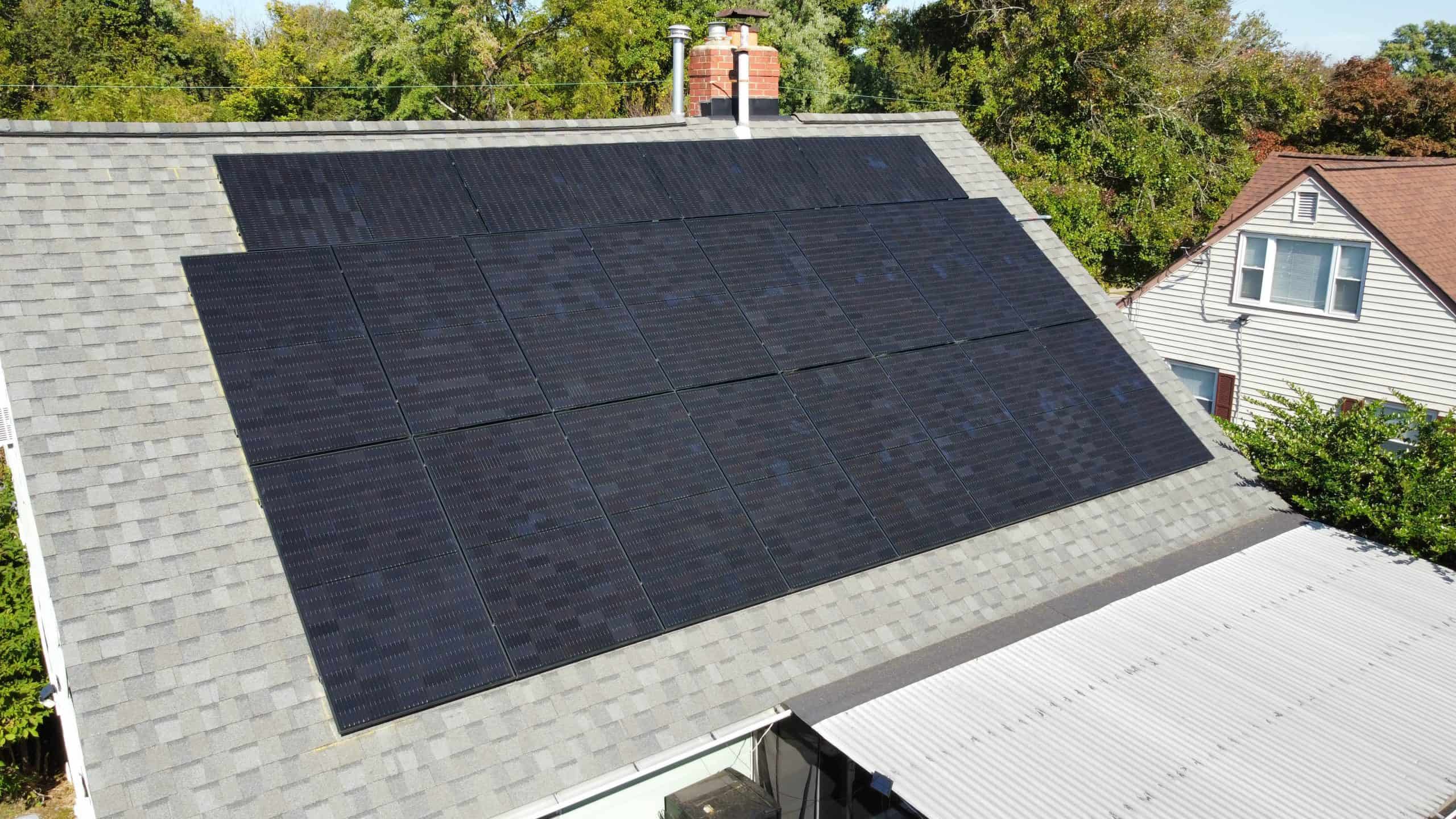
The panel going on a homeowner’s roof in 2026 is a fundamentally different product from the one that defined residential solar five years ago. Cell architecture has shifted, wafer dimensions have grown, and the manufacturing geography is changing. What counted as a high-efficiency panel in 2022 now falls below the commercial baseline.
Silicon Is Still the Starting Material
Solar panels begin with silicon, the second most abundant element in Earth’s crust. Raw quartz is reduced into metallurgical-grade silicon, then further refined into polysilicon through the Siemens process, which typically achieves 8N to 11N purity. That ultra-pure polysilicon is the feedstock for nearly all solar cells manufactured today.
The process is energy-intensive, which is one reason manufacturing location has always mattered for cost. Cheap industrial electricity gives any facility a structural cost advantage at this stage, shaping where most of the world’s polysilicon gets made.
How Polysilicon Becomes a Monocrystalline Ingot
Refined polysilicon is melted in a quartz crucible at around 1,400°C. A seed crystal is dipped into the melt and slowly pulled upward while rotating, growing a cylindrical monocrystalline ingot through the Czochralski process. The controlled pull rate ensures a uniform crystal lattice throughout the ingot.
Monocrystalline silicon dominates residential solar because its single-crystal structure lets electrons travel with less resistance than polycrystalline silicon, which is composed of many smaller grains bonded together. Polycrystalline panels have largely exited the premium residential market as a result.
Wafer Sizes Standardized on Larger Formats in 2021-2023
Once the ingot cools, it is trimmed and sliced into thin wafers using diamond wire saws. M10 (182mm) and G12 (210mm) wafers became the industry standard through 2021-2023, replacing the older M2 (156.75mm) format. Those larger sizes now account for the majority of global supply, with 182mm and larger formats on track to represent virtually all production by the early 2030s.
Wafer thickness has also decreased from older production runs, consuming less silicon per cell and reducing material cost.
TOPCon Has Replaced PERC as the Mainstream Cell Technology
Passivated Emitter and Rear Cell (PERC) added a rear passivation layer to reduce electron recombination, pushing commercial module efficiencies into the 21-22% range. For several years it was the residential standard. It no longer is.
TOPCon (Tunnel Oxide Passivated Contact) overtook PERC and became the dominant cell technology shipped globally in 2024. TOPCon adds a thin tunnel oxide layer plus doped polysilicon on the rear contact, more aggressively suppressing recombination losses. Commercial TOPCon cells now achieve roughly 24% efficiency, with leading commercial modules reaching 22-24%. If a contractor is presenting PERC panels as a premium product in 2026, that warrants a follow-up question.
HJT (Heterojunction Technology) sits above TOPCon at the premium tier. It layers thin amorphous silicon on both sides of a crystalline silicon wafer, achieving 24-25% efficiency with a lower temperature coefficient. That means HJT panels lose less output on hot days, a meaningful advantage in warmer climates.
| Cell Technology | Typical Commercial Efficiency | Status in 2026 |
| BSF | ~17-18% | Largely obsolete |
| PERC | 21-22% | Being phased out of premium lines |
| TOPCon | 22-24% | Current mainstream standard |
| HJT | 24-25% | Premium residential tier |
How a Solar Cell Converts Light into Electricity
Each wafer is doped to create a p-n junction, a boundary between two regions with different electrical charges. When photons hit the cell, they knock electrons loose, and the electric field at the junction pushes those electrons in one direction, generating direct current.
Silicon nitride anti-reflective coating, applied through Plasma-Enhanced Chemical Vapor Deposition (PECVD), reduces surface light reflection and improves absorption. Silver paste contacts on the front of the cell collect the current. Reducing silver content per cell has been an active focus across manufacturers, since silver is a significant per-panel cost input.
Perovskite-Silicon Tandem Cells Are the Architecture to Watch
This is where manufacturing is heading. Perovskite-silicon tandem cells stack a perovskite layer on top of a silicon cell, each absorbing a different portion of the solar spectrum. Because the two layers together capture more of the incoming light than any single-junction silicon design can, tandem cells break through the efficiency ceiling that limits all-silicon panels.
Lab-produced tandem cells have exceeded 34% efficiency, well above the best commercial HJT module on the market today.
A handful of manufacturers have begun limited commercial releases, though long-term durability at scale is still being validated. This is not yet a reason to delay a purchase, but it is worth tracking when comparing product roadmaps and warranty terms across installers.
How Individual Cells Are Assembled into a Module
Finished cells are tabbed and soldered together in series using thin copper ribbons, forming strings. Those strings are arranged in the module layout and laminated under heat and pressure using ethylene vinyl acetate (EVA) encapsulant, which bonds the assembly and blocks moisture ingress.
The stack is sandwiched between a tempered glass front and either a polymer backsheet or, on bifacial panels, a second sheet of tempered glass. Bifacial panels capture light reflected off the ground or rooftop surface from the rear side, adding energy yield that shows up in annual production totals.
Bifacial designs have moved from a premium add-on to the standard configuration on most commercial residential product lines. The finished module is framed in aluminum, fitted with a junction box and bypass diodes on the rear, and sealed before testing.
Every Panel Is Flash-Tested Before It Ships
Completed modules are tested under standard test conditions (STC): 1,000 W/m² irradiance, 25°C cell temperature, AM 1.5 spectrum. This produces the nameplate wattage on the label and bins panels by actual output.
Panels sold in the US market should carry both IEC 61215 (performance) and IEC 61730 (safety) certifications. UL listing is required by most utilities for interconnection. The federal residential solar tax credit expired at the end of 2025, though state and local incentives remain available across many markets.
US Solar Manufacturing Has Expanded Under the IRA
The Inflation Reduction Act’s Section 45X manufacturing production credits have funded a significant wave of domestic solar factory investment. New US cell and module facilities have come online since 2023, reducing exposure to import tariffs and simplifying the supply chain documentation that federal compliance now requires.
That documentation matters beyond tariffs. The Uyghur Forced Labor Prevention Act, in effect since 2022, requires importers to demonstrate that polysilicon in their supply chain is not sourced using forced labor in China’s Xinjiang region. Starting in 2026, Foreign Entity of Concern restrictions added to the IRA bar manufacturers with significant Chinese ownership or supply chain ties from claiming Section 45X manufacturing credits, tightening supply chain accountability across the US market.
Reputable manufacturers operating in the US market can document their polysilicon sourcing and confirm they have no prohibited foreign ownership or supply chain ties. If a manufacturer can’t do either, it is a red flag.
What to Ask Before Signing a Solar Contract in 2026
- What cell technology does the panel use? TOPCon is the baseline for any system installed in 2026. HJT is the upgrade for buyers prioritizing peak efficiency and heat performance.
- What is the temperature coefficient? HJT panels typically run around -0.26%/°C. PERC ran closer to -0.35%/°C. Lower is better, particularly in hot climates.
- What are the product and power warranties? Top manufacturers now offer 25-year product warranties with power retention guarantees of 87-92% at year 25.
- Are the panels IEC-certified and UL-listed? Non-negotiable for utility interconnection and permitting.
- Where is the polysilicon sourced? Any manufacturer with a clean supply chain should be able to answer this directly.
- What financing options make sense? With the federal residential tax credit gone, financing and $0-down programs let you go solar without a high upfront cost while still locking in long-term energy savings.
Ready to put 2026-spec panels on your roof? Contact us today to learn which cell technologies we install and what makes sense for your home.
Want a Free Solar Estimate?
Fill out the form to get started today.